

We have all heard the hype about AI. Sometimes it is about all the great things it can do. Other times it is about people being displaced from the work force and who is next. While it is true AI can do a lot of things, there are limits to what it can do. Some companies are laying off people in favor of AI, while others have reversed course and are rehiring people. After my research I believe the truth lies somewhere in the middle. Personally I believe the people who need to worry about AI are those that don’t know how to apply it to increase their own productivity. No doubt we are on the verge of a shift and 10 years down the road it may even be a bigger change altogether, but for now understanding and using AI can set you apart.
About AIs
What we commonly call AIs are LLMs (Large Language Models). Going forward I will refer to them as LLMs because the “Intelligence” part of AI is actually a misnomer.
An LLM is a system that has been trained on almost everything on the public internet. It is a complex mathematical algorithm that provides a representation of how language works. It doesn’t “know” things the way we do. However, it is a master of pattern recognition. It uses probabilities to determine its output.
LLMs must first be trained before they can be used. To start, massive amounts of data from the internet, books, articles, and any other sources of information are broken down into “tokens”. Tokens are machine readable chunks of data that can be whole words, partial words, or characters. After tokenization the models are trained in 2 main ways; self-supervised and supervised learning. With both types of learning the LLMs find patterns, structures and relationships on their own. However, with supervised learning the data being used has been given labels for the LLM to compare against, while with self-supervised learning the LLMs have no labels to compare against. Supervised learning is far more expensive because it usually requires people or other systems to label the data which takes time and money. To make the probabilities more accurate a process called self-attention is also done. This is the grouping of like items together to make relevant tokens have more weight than non-relevant ones. For example, let’s use a prompt about baseball. The words ball and bat might be used quite frequently together while bat and animal would not be as relevant. Essentially this would give more weight to the combined items of “ball and bat” higher than “bat and animal.”
Tokens are machine readable chunks of data that can be whole words, partial words, or characters.
Finally there are customizations that can be done to the model. Fine-tuning is used to tailor the model for a specific use. For example, if we want the model to answer questions about legal court cases we would use a smaller data set with labels (supervised learning) to give more weight to legal topics. Retrieval augmented generation also called RAG is the retrieval of information from an external source outside of its training. This can allow a model to provide newer answers without retraining the entire model. For example, if our LLM model was trained in January 2025 and we want to find any similarities between a legal case from 1995 and a case from last month we would need to have the LLM search for data it does not currently have. This could be by connecting to a search provider or possibly your own data warehouse.
LLMs can and are being used in a variety of ways now. In fact I used an LLM to create the outline for this article. It can do content creation, summarization, be personal assistants, code creation, sentiment analysis (analyzing the tone of text), and reasoning (math problems, multi-step processes). I have defined these more in depth below.
If you are interested in more details about LLMs, here is a great post by IBM Think.
AI Limitations
The first thing you should know about LLMs is that it isn’t a database or a search engine. They are essentially the world’s most sophisticated “auto-complete” engines. As we discussed before, they don’t know anything. They use advanced statistics to predict the next most likely token in the sequence.
The second thing to know is that LLMs can hallucinate. Hallucinations are “plausible but false statements generated by language models.” Let’s suppose the next token has 3 options, whose probabilities are very close to each other. The LLM must choose one of those tokens. It has a 1 in 3 shot of getting the “correct” answer. It will choose a token and present the information as fact and someone who isn’t versed in the subject may believe the wrong information. There is a lot more about how hallucinations occur and what companies are doing to overcome it. This post by OpenAI may help in understanding more if you are interested.
…will choose a token and present the information as fact and someone who isn’t versed in the subject may believe the wrong information.
How Should We Use LLMs?
So now we know what LLMs are, what they can do, and their limitations, how should we use them? While they can function as a search engine, you need to go beyond this. You should stop “asking” them things and start “steering” them. This means you start to be less of a doer and more of an editor and designer. You should focus on architecture and intent and let the LLMs do the mundane data entry and other tasks. An important part of this new way of working is to become an “auditor”. Once the LLM has done its part you as the subject matter expert need to verify it has done what you asked. Part of this new way of working is to learn how to steer the LLM to get the results you want.
…start to be less of a doer and more of an editor and designer. You should focus on architecture and intent and let the LLMs do the mundane data entry and other tasks.
Let’s use the following scenario: You are a sales director for a medium size company that wants to know what products sold the best over the past year in order to make projections for the upcoming year. Below is a prompt you might give to an LLM.
“Create a sales report for the last 12 months that shows which products are selling the best.”
While the LLM will create you a report for the last 12 months, you may find the results not useful. While this might be a start for your analysis you have a lot more work ahead of you. Did it include a product you did a discontinuation on? Which products were on promotion and for how long?
A better prompt might be below (I have created a bulleted list for human readability, but the LLM doesn’t need it in this format.):
“Create a sales report in a spreadsheet for the last 12 months that shows the sales of all products.
- Include following fields: name of the product, units sold, revenue, revenue per unit , profit, and profit per unit.
- Create a line graph for each of these items on different tabs with the products on the x-axis and the value on the y axis.
- Sort this by highest value on the y-axis."
This is a much better prompt as it is more specific in what you want and will require less work on your part. However, both of these prompts don’t realize the full potential of LLMs.
An even better prompt might be:
“Create a sales report in a spreadsheet for the last 12 months that shows the sales of all products.
- Include following fields: name of the product, units sold, revenue, revenue per unit , profit, and profit per unit.
- Create a line graph for each of these items on different tabs with the products on the x-axis and the value on the y axis.
- Sort this by highest value on the y-axis.
Once completed analyze the data created and
- Create a sales projection for each product for the next 12 months in a spreadsheet.
- Put products on the rows and monthly projections in the columns.
- Put notes for any abnormalities in the data like production discontinuation, or promotional pricing that is not being continued.
- Provide any ideas for improvement on products that are "underperforming”.
With the first 2 prompts you are still doing manual work, while with the final prompt you are asking for a completed item. Now is where your job starts. You now have to verify the data and the conclusions the LLM has drawn. If you see an error you don’t need to edit manually you can refine your prompt or start again from scratch fine tuning your original prompt. In this way you become more strategist, architect, and auditor.
Asking the LLM to create an outline before you even ask it to create the sales report may even give you more help. Before the LLM does anything to create the report you could use the prompt:
“Create an outline of what needs to be considered for a sales report for the last 12 months and a report projected sales for the next 12 months. Suggest ways to make the report better and more usable.”
While the LLM may not know anything about your specific situation, it does have access to many other similar situations in its training data and it can suggest things for you to look at and include in your report. In our example of a sales report it could suggest either to convert currencies from other countries into US dollars. Something you may not consider at first.
If you want to more easily check the work of the LLM you can have it execute tasks in stages or steps. If something goes wrong you simply revert back to the previous step and try again. This reduces the need to redo the whole process again. My partner, Crit Russell, prefers to create a document with these stages and have the LLM just refer to the stage he wants to work on. Let’s take our prompt from earlier and break it up into stages and put it into a file.
<report.txt>

Stage 1

Create a sales report in a spreadsheet for the last 12 months that shows the sales of all products.

1. Include fields: name of the product, units sold, revenue, revenue per unit , profit,
   and profit per unit.
2. Create a line graph for each of these items on different tabs with the products on
   the x-axis and the value on the y axis.
3. Sort this by highest value on the y-axis.

Stage 2

Create a sales projection for each product for the next 12 months in a spreadsheet

1. Put products on the rows and monthly projections in the columns.
2. Put notes for any abnormalities in the data like production discontinuation, or promotional
   pricing that is not being continued.
3. Provide any ideas for improvement on products that are underperforming.

</report.txt>
So the 1st prompt would be:
“Use attached file report.txt and execute Stage 1 Mark the stage completed in the report.txt file. Create the file in .xlsx format and label the file previous_sales.xlsx”
The second prompt would be:
“Use attached file report.txt and execute Stage 2 Mark the stage completed in the report.txt file. Create the file in .xlsx format and label the file sales_projections.xlsx”
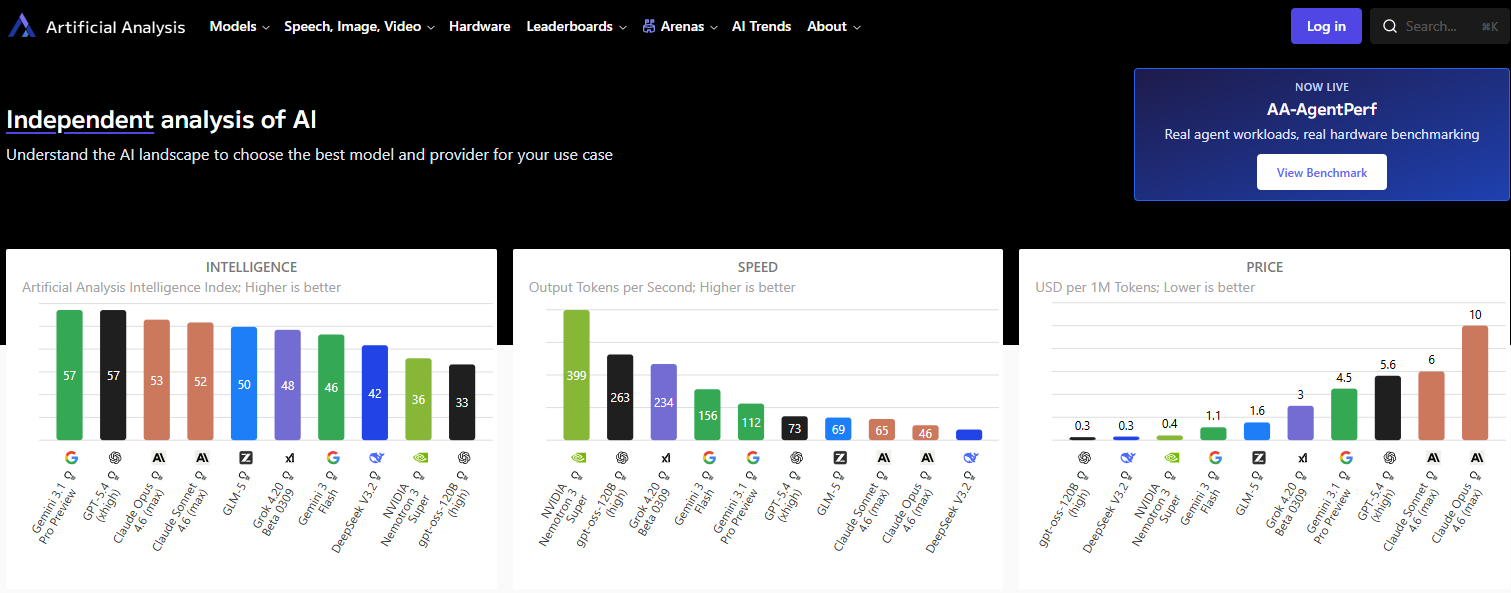
One final thing to consider is which LLM to use. Each LLM has strengths and weaknesses. Industry benchmarks exist to track the models and how well they do with certain tasks along with other aspects of the model. One such group that does reviews and testing for LLMs is artificialanalysis.ai. You can use these benchmarks to determine which one will be best for your needs and budget.
Who will and won’t survive?
Those that are subject matter experts and know what good output is supposed to look like will flourish with AI. They can let the LLM do the heavy lifting, but know when the LLM has it wrong and can steer it where it needs to go. In addition, people that know how to apply LLMs to the real world and do things faster and more efficiently will maintain or more likely improve their current employment positions. Finally, those people that can handle ambiguity, undefined gray areas, and things that don’t always have a “right” answer will still have jobs. LLMs are not yet to a level where some tasks like contract negotiations, can reliably be accomplished correctly.
Unfortunately anyone whose job is summarizing, formatting, report building, or data entry may be at risk from LLMs.
The bottom line is LLMs won’t replace most people, but someone using LLMs to do the work of 2-3 people will.
Final Thoughts
Whether LLMs should be called AI or not isn’t really the point. The question you should be asking yourself is am I the one driving and steering the LLMs or am I about to be run over by them. How do you think LLMs should be used in the current workplace environment?
The bottom line is LLMs won’t replace most people, but someone using LLMs to do the work of 2-3 people will.